


 русский
Why Steel Is the Dominant Material for Industrial Valve Components
Steel valve parts — including bodies, bonnets, stems, discs, seats, and fasteners — account for the overwhelming majority of valves installed in oil and gas, petrochemical, power generation, water treatment, and general industrial process piping worldwide. The dominance of steel over competing materials like cast iron, bronze, and thermoplastics is not simply a matter of tradition. Steel delivers a combination of mechanical strength, temperature range, weldability, and machinability that no other single material family can match across the full spectrum of industrial service conditions.
The steel used in valve parts is not a single material but a broad family of alloys — carbon steels, low-alloy chromium-molybdenum steels, austenitic and duplex stainless steels, and precipitation-hardened grades — each engineered to solve specific combinations of pressure, temperature, corrosion, and abrasion challenges. A valve body handling dry natural gas at moderate pressure in a temperate climate may be entirely adequately served by a carbon steel part to ASTM A105. A valve handling wet sour gas with hydrogen sulfide at high pressure and elevated temperature requires a low-alloy steel body heat-treated to specific hardness limits, with stainless steel trim components, all qualified to NACE MR0175 requirements. Understanding which steel grade is appropriate for which service is the foundation of correct steel valve part specification.
Beyond material selection, the manufacturing process used to produce steel valve parts — casting, forging, bar stock machining, or fabrication — has a profound effect on the part's microstructure, mechanical properties, defect probability, and ultimately its service reliability. Steel parts produced by different manufacturing routes carry different material specifications, inspection requirements, and pressure-temperature ratings, even when made from nominally similar alloy compositions. This guide covers all the major steel valve part categories, the grades and standards that govern them, and the practical considerations that determine correct part selection and replacement.
Steel Valve Body and Bonnet Parts: Cast vs. Forged vs. Fabricated
The valve body is the primary pressure-containing structure of any valve — the shell that encloses the flow passage, supports the seating surfaces, and provides the structural attachment points for the bonnet, stem packing gland, and actuator. The bonnet is the secondary pressure boundary component that closes the top opening of the body, houses the stem and packing, and provides the stem the mechanical guidance needed for precise disc or plug positioning. Together, body and bonnet account for the majority of the valve's material weight and cost, and their steel grade and manufacturing process define the valve's pressure class and temperature rating.
Cast Steel Body Parts: ASTM A216 and A351
Cast steel valve bodies and bonnets are produced by pouring molten steel into shaped molds and allowing it to solidify into the near-net shape of the part. ASTM A216 covers carbon steel castings for high-temperature service, with Grade WCB (the most widely used valve body casting material) specifying minimum tensile strength of 485 MPa and yield strength of 250 MPa — matching the mechanical properties of forged A105 carbon steel. ASTM A351 covers austenitic stainless steel castings, with grades CF8M (equivalent to wrought 316 stainless) and CF8 (equivalent to 304 stainless) being the standard materials for corrosion-resistant valve bodies. Cast bodies are the dominant choice for medium-to-large valve sizes — typically DN50 (2 inches) and above — because casting allows complex internal flow passage geometries to be formed in a single piece without the material waste and press capacity requirements of large forgings.
The inherent limitation of cast steel valve parts is the possibility of internal discontinuities — porosity, shrinkage cavities, inclusions, and hot tears — that can remain undetected in visual inspection and only become apparent as through-wall defects when the part is pressurized in service. For this reason, cast valve bodies and bonnets in critical or high-pressure service are subject to radiographic testing (RT) or ultrasonic testing (UT) as part of the manufacturing inspection protocol, with acceptance criteria defined by ASTM A703 and the applicable valve design standard.
Forged Steel Body Parts: ASTM A105 and A182
Forged steel valve bodies and bonnets are produced by mechanically working heated steel under high compressive force, refining the grain structure and eliminating the porosity inherent in castings. Forged parts in equivalent steel grades are stronger, denser, and more reliable than cast parts of the same geometry, making forged bodies the standard for small-bore high-pressure valves — typically DN50 (2 inches) and below in pressure classes 800 through 4500. ASTM A105 is the standard carbon steel forging specification for valve bodies and flanges; ASTM A182 covers alloy and stainless steel forgings in grades F11, F22, F91 (chromium-molybdenum alloy steels for high-temperature service) and F304, F316, F51, F60 (stainless and duplex stainless steels for corrosion-resistant service). Forged bodies rarely require radiographic testing because the forging process virtually eliminates internal voids, reducing inspection requirements and inspection cost relative to cast bodies of equivalent pressure rating.
Steel Valve Trim Parts: Stems, Discs, Seats, and Balls
Valve trim refers to the internal wetted parts that control flow — the stem, disc or plug, seating surfaces, ball, and associated guides and retainers. Trim parts are in direct contact with the process fluid and experience the highest mechanical stress concentrations, the greatest velocity-induced erosion, and in many services the most aggressive corrosion conditions. Steel trim parts must therefore be specified not only for mechanical strength but for corrosion resistance, hardness, and wear resistance that may differ significantly from the body material requirements.
Valve Stems: Material and Surface Requirements
The valve stem transmits actuating force or torque from the handwheel, gear operator, or actuator to the disc or plug, while the stem-to-bonnet interface provides the dynamic pressure seal through the packing system. Stems are typically machined from bar stock or forgings to tight dimensional tolerances, with surface finish requirements on the packing contact zone typically specified at Ra 0.8 µm or better to minimize packing wear and prevent leakage paths along the stem surface. Common stem materials include AISI 410 martensitic stainless steel (hardened to resist galling against the packing and stem bushing), AISI 316 austenitic stainless steel (for general corrosive service), and 17-4PH precipitation-hardened stainless steel (for high-strength applications where 316 lacks sufficient yield strength). In sour service applications, stem material hardness must comply with NACE MR0175 limits — typically Rockwell C 22 maximum for most carbon and low-alloy steels — to prevent sulfide stress cracking.
Disc and Plug Parts: Solid Steel and Overlay Designs
The disc (in gate, globe, and check valves) or plug (in plug valves) is the movable closure element that contacts the seating surface to provide shutoff. Disc and plug parts in steel valves may be solid steel — typically hardened stainless steel — or may incorporate hard-facing overlays such as Stellite (cobalt-chromium alloy) or tungsten carbide applied by welding or thermal spray to the seating contact surfaces. Hard-facing is particularly important in services handling abrasive fluids such as slurry, sand-laden produced water, or catalyst-containing process streams, where metal-to-metal seating surfaces experience rapid wear that would reduce valve shutoff capability within months of service without a hard-facing layer. The contact surface hardness differential between disc and seat is also critical — if both seating surfaces have identical hardness, they tend to gall under the compressive seating load. Standard practice specifies a minimum Rockwell C 5 hardness difference between disc and seat contact surfaces, with the harder material typically on the seat ring.
Ball Parts: Solid and Hollow Ball Designs
Steel ball valve balls are precision-machined spherical components with a through-bore, typically manufactured from solid bar stock (for small to medium bore sizes) or hollow forged shells (for large bore sizes where solid construction would produce unnecessarily heavy balls). The ball's seating surface must be machined and polished to a spherical tolerance tight enough to produce bubble-tight closure against the valve seat — typically requiring roundness within 0.01–0.03mm on the ball diameter. Common ball material specifications include AISI 316 stainless steel (general service), 316 stainless with electroless nickel plating (for improved hardness and abrasion resistance), and 316 stainless with tungsten carbide spray coating (for severe erosive service). Balls in trunnion-mounted ball valves carry the full hydraulic thrust load through the trunnion bearings, requiring yield strength adequate to resist permanent deformation at the trunnion journal under maximum design pressure load.
Seat Ring Parts: Threaded, Welded, and Integral Designs
The seat ring is the stationary seating surface within the valve body against which the disc, ball, or plug closes to provide shutoff. In many valve designs, the seat ring is a separate replaceable part that can be removed and replaced when the seating surface is worn or damaged, without replacing the entire valve body. The ability to replace seat rings in-line — either by threaded removal or by seal-welded replacement — is a significant maintenance cost advantage in services where seat erosion or corrosion is the primary valve failure mode.
Threaded seat rings are retained in the body by a coarse thread, sometimes supplemented by a lock weld or staking after installation to prevent loosening under vibration. They can be removed with a specialized seat ring puller tool for replacement without removing the valve from the piping system. Welded seat rings are seal-welded into the body after threading in, providing a permanent, leak-tight joint between the seat ring OD and the body pocket that prevents seat bypass leakage. Integral seats — where the seating surface is machined directly into the valve body without a separate seat ring — are used in lower-pressure cast steel valves where the simplicity and elimination of the seat ring joint compensates for the inability to replace the seating surface without reboring and re-welding the body.
Seat ring steel grades are typically harder than the body steel to resist the wear and erosion of repeated opening and closing cycles. Common seat ring materials for general process service include AISI 410 hardened stainless steel (Rockwell C 22–35 after heat treatment), 13% chromium steel, and 316 stainless with Stellite overlay on the contact face. For severe abrasive service, tungsten carbide insert seat rings or tungsten carbide overlay seats are used, providing surface hardness of Rockwell C 60–68 that resists wear in sand, catalyst, and catalyst fines service.
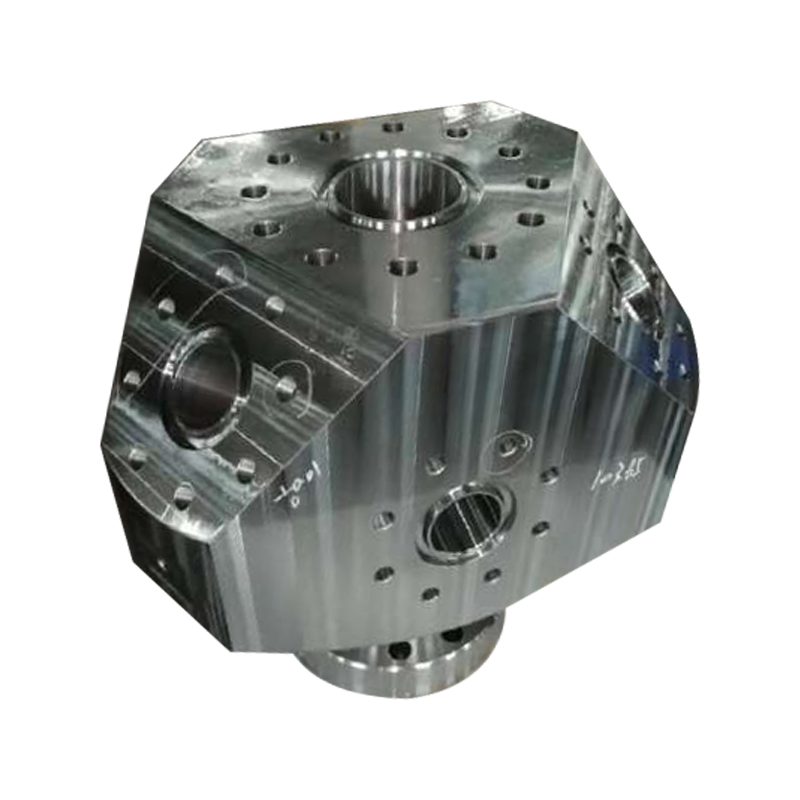
Steel Fastener Parts: Bolting, Studs, and Nuts for High-Pressure Valve Assemblies
The bolting that joins the valve body to the bonnet, the bonnet to the gland, and the end flanges to the mating piping flanges is among the most critically loaded steel parts in any valve assembly. Body-bonnet bolting is subject to sustained tensile stress from gasket compression loads, cyclic thermal stress from process temperature fluctuations, and bending stress from piping reaction forces. Incorrect bolting material specification, incorrect bolt dimensions, or improper bolt tensioning procedures are among the most common root causes of fugitive emissions, bonnet leakage, and in extreme cases, valve assembly failure under pressure.
| ASTM Grade | Material Type | Min. Tensile (MPa) | Temp. Range | Typical Application |
|---|---|---|---|---|
| A193 B7 / A194 2H | Cr-Mo alloy steel stud / heavy hex nut | 862 | −45°C to +538°C | General high-pressure / high-temperature valve bolting |
| A193 B8M / A194 8M | 316 stainless stud / nut | 517 | −200°C to +538°C | Corrosive service and cryogenic valve bolting |
| A193 B7M / A194 2HM | Cr-Mo alloy steel, NACE hardness limit | 724 | −45°C to +538°C | Sour service (H₂S-containing) process valves |
| A320 L7 / A194 4 | Cr-Mo alloy steel, low-temperature impact tested | 862 | −101°C to +340°C | Cryogenic and low-temperature service valves |
The most critical bolting selection error in valve assembly is using standard A193 B7 bolting in sour service applications where NACE MR0175 requires B7M (which has the same alloy composition but is heat-treated to a lower hardness of Rockwell C 22 maximum). B7 studs heat-treated to standard strength levels have hardness values of Rockwell C 26–35, which exceeds the NACE limit and makes them susceptible to sulfide stress cracking in wet H₂S environments — a failure mode that can cause sudden brittle fracture of a stud under load, potentially resulting in violent pressure release at the body-bonnet joint. Visually, B7 and B7M studs are identical and cannot be distinguished without hardness testing; procurement and material traceability controls are essential to ensure correct bolting grade is installed in sour service valves.
Gland, Packing Follower, and Yoke Parts: The Stem Sealing Assembly
The stem sealing assembly — comprising the gland flange or gland follower, packing retainer, and yoke or bonnet extension — is the part of the valve most exposed to fugitive emissions monitoring requirements and the most frequently adjusted or replaced during routine valve maintenance. The gland follower is the steel compression element that transmits gland bolt load into the packing, compressing the packing material radially against the stem and axially against the packing box walls to create the dynamic pressure seal. Gland follower parts must be manufactured to precise dimensional tolerances to ensure uniform packing compression without tilting — a tilted gland follower loads the packing unevenly, creating high-stress zones that cause accelerated packing wear and early leakage.
Gland parts are typically machined from the same steel grade as the bonnet — carbon steel for general service valves, stainless steel for corrosion-resistant valves — with a clearance fit on the stem that allows free movement while guiding the gland perpendicular to the stem axis. The gland bolts or studs that connect the gland flange to the bonnet must be sized not only for the initial packing load but for the additional load required when re-tensioning packing that has taken a compression set during the first several thermal cycles of service. Under-sized gland bolts that cannot provide adequate load range for re-tensioning are a common source of persistent stem leakage on aging valve installations.
The yoke is the structural steel framework that connects the bonnet to the actuator mounting interface, transmitting the actuator's force or torque to the stem through the stem nut or handwheel. In rising-stem gate and globe valves, the yoke houses the stem nut that converts rotational handwheel motion into linear stem travel. Yoke parts are typically cast steel in large valve sizes, using the same A216 WCB material as the body, or may be fabricated steel plate welded construction in bespoke large valves. The yoke's structural adequacy must account for the maximum stem thrust at design pressure, including the friction contribution of the packing load on the stem, which in high-pressure valves can make packing friction a significant fraction of the total stem force required to operate the valve against line pressure.
Specialty Steel Grades for Demanding Valve Service Conditions
Standard carbon steel and austenitic stainless steel parts cover the majority of industrial valve applications, but certain service conditions require specialty steel grades that deliver specific combinations of properties — extreme temperature resistance, high strength in thin sections, resistance to stress corrosion cracking, or compatibility with aggressive process chemistry — that standard grades cannot provide.
Chromium-Molybdenum Alloy Steels for High-Temperature Service
In power generation, refinery hydrotreating, and high-temperature process service above 400°C, carbon steel valve parts lose strength progressively through a phenomenon called high-temperature creep — slow, time-dependent deformation under sustained stress at elevated temperature. Chromium-molybdenum (Cr-Mo) alloy steels resist creep far more effectively than carbon steel, making them the standard material for high-temperature valve bodies and bonnet parts in these services. Grade 1.25Cr-0.5Mo (ASTM A182 F11, A217 WC6) is suitable to approximately 565°C; 2.25Cr-1Mo (F22, WC9) extends to 593°C; and 9Cr-1Mo-V (F91, C12A) is used to 650°C in advanced ultrasupercritical power plants. Each step up in Cr-Mo content provides better creep resistance but also increases the material's weld heat input requirements and post-weld heat treatment demands, adding fabrication cost and complexity to valve assemblies in these grades.
Duplex and Super-Duplex Stainless Steel Parts
Duplex stainless steel valve parts — specified as ASTM A182 F51 (UNS S31803/S32205) or F60 (UNS S32550) — have a two-phase microstructure of austenite and ferrite that delivers approximately twice the yield strength of standard austenitic grades like 316, while maintaining excellent resistance to chloride pitting and crevice corrosion. In offshore produced water handling, subsea pipeline valves, and seawater cooling systems where chloride-induced stress corrosion cracking rules out standard austenitic stainless, duplex stainless provides the resistance to both general and localized corrosion that these severe environments demand, with a strength advantage that allows thinner-walled valve bodies at equivalent pressure ratings. Super-duplex grades (F53, UNS S32750) extend the chloride resistance further, suitable for higher-temperature seawater service and produced water with elevated H₂S and CO₂ partial pressures.
Low-Temperature Carbon and Alloy Steel Parts
Standard carbon steel valve parts to ASTM A216 WCB and A105 have a minimum Charpy impact test requirement at −29°C, which is adequate for most temperate climate process services but insufficient for LNG, cryogenic ethylene, liquid propane, and other low-temperature process services. ASTM A352 LCB and LCC are low-temperature carbon steel castings with impact test requirements to −46°C and −62°C respectively; A352 LC3 (nickel alloy steel) extends to −101°C for liquid propane and butane service; and A351 CF8 austenitic stainless castings maintain adequate toughness to cryogenic temperatures (−196°C) without impact testing requirements, owing to the inherently tough FCC crystal structure of austenitic stainless steel at low temperatures.
Identifying, Inspecting, and Replacing Steel Valve Parts in Service
Correct identification of steel valve parts is the prerequisite for successful replacement and is a frequent source of errors in plant maintenance operations. Steel valve parts carry material identification markings — heat numbers, material grade stamps, and heat treatment condition codes — that must be traceable to material test certificates (MTCs) or mill certificates that confirm the chemical composition and mechanical test results for the specific heat of material. For critical pressure-boundary parts including bodies, bonnets, stems, and bolting in safety-critical or sour service applications, full material traceability from the steel mill through to the installed valve is a regulatory requirement in many jurisdictions and an essential element of process safety management.
When replacing steel valve trim parts — discs, seat rings, balls, and stems — it is essential to use replacement parts that match the original specification in material grade, hardness, surface finish, and dimensional tolerances. Substituting a lower-grade material to save cost, or using a part from a non-OEM supplier without verifying dimensional conformance to the original, introduces failure risks that may not manifest immediately but emerge after several thermal cycles or under the mechanical stress of a rapid emergency shutoff. For valves in critical service categories — emergency shutoff (ESD), blowdown, fire protection, and safety instrumented system (SIS) valves — replacement parts should only be sourced from the original valve manufacturer or a qualified spare parts supplier who can provide material certification and dimensional inspection reports for each part.
Common Steel Valve Part Failure Modes and What to Look For
- Seat and disc erosion: Visible as surface roughness, pitting, or grooving on the seating contact surfaces, causing loss of shutoff capability. Common in services with flashing, cavitation, or particulate-containing fluids. Requires seat ring replacement or resurfacing and may require disc replacement if the contact surface is beyond refinishing limits.
- Stem corrosion and pitting: Pitting on the stem surface in the packing contact zone accelerates packing wear and creates leak paths. Inspect the packing zone length of the stem at each packing replacement. Pitted stems in corrosive services should be replaced rather than polished — re-polishing reduces the stem diameter below the packing bore fit tolerance.
- Galling on ball or plug surfaces: Galling appears as torn, smeared surface metal on the ball or seat seating contact zone, caused by high compressive stress at the contact interface without adequate lubrication. Galled parts cannot be refinished and must be replaced; the root cause — inadequate stem packing lubrication, misaligned seats, or excessive seating load from an oversized actuator — must be corrected to prevent recurrence.
- Stress corrosion cracking of stainless stems: Appears as fine branching cracks, typically at threaded sections or keyway locations where stress concentrations combine with chloride exposure. Austenitic stainless 316 stems in chloride-containing services are susceptible — consider upgrading to duplex stainless or precipitation-hardened grades in affected service environments.
- Stud and nut corrosion at flange joints: External corrosion of carbon steel studs at exposed flanged joints in wet or coastal environments leads to thread seizure that makes future disassembly extremely difficult and risks stud breakage during removal. Apply anti-seize compound to all stud threads and nut bearing faces at assembly, and inspect external bolting condition annually in corrosive environments.
Specifying Steel Valve Parts: What to Include in a Purchase Order
Purchasing steel valve parts without a complete technical specification is the most common source of mismatched materials, incorrect dimensions, and post-delivery disputes in valve maintenance and repair operations. Providing a complete, unambiguous specification with every purchase order eliminates these problems at their source and ensures that replacement parts fit, perform, and remain serviceable for the expected life of the repaired valve.
- Valve manufacturer, model number, and serial number: Enables the supplier to reference the original bill of materials for dimensional and material specifications, eliminating guesswork about part geometry and tolerances.
- Part name and position number from the valve assembly drawing: Avoids ambiguity between visually similar parts (e.g., body seat ring vs. disc seat ring, or upper stem vs. lower stem in a double-stem valve design).
- Material specification and grade: State the full ASTM grade, UNS number, and heat treatment condition (e.g., ASTM A182 F316L, UNS S31603, solution annealed). Do not specify only "316 SS" — this is ambiguous between F316 and F316L grades, which have different carbon content limits and weldability characteristics.
- Required hardness range: Specify Rockwell or Brinell hardness range for trim parts where surface hardness affects seating and wear performance. For NACE-compliant parts, specify the maximum hardness limit explicitly.
- Surface finish requirements: Specify Ra surface finish values for stem packing zones, ball seating surfaces, and seat ring contact faces where finish affects sealing performance.
- Material certification requirements: Specify whether a 3.1 or 3.2 certificate per EN 10204 is required, whether NACE MR0175 compliance certification is needed, and whether any non-destructive examination (dye penetrant, magnetic particle, hardness survey) is required as part of the part acceptance criteria.
- Quantity and required delivery date: For critical service valves, maintain a defined minimum spare parts inventory of high-wear trim parts (seat rings, discs, stem assemblies) to avoid extended valve-out-of-service periods when repair parts have long manufacturing lead times.
