


 русский
Valves—we rarely think about them, yet they are the unsung heroes of the modern world. From the tap in your kitchen to the complex machinery powering an oil refinery, valves are essential components that control the flow, pressure, and direction of fluids (liquids, gases, or slurries). And at the heart of every reliable, high-performance valve are the machined valve parts—components crafted with incredible precision to withstand brutal conditions and perform flawlessly, often for decades.
What Exactly Are Machined Valve Parts?
Simply put, these are the critical internal pieces of a valve that have been shaped, cut, and finished using highly controlled manufacturing processes, primarily machining. Machining involves using tools to remove material from a workpiece (a block of raw material) to create a specific, precise geometry. This is different from casting or forging, which form the material into an approximate shape.
Why is Machining Necessary for Valves?
Valves operate by creating a tight seal between two surfaces—a movable part and a stationary seat—to either allow flow or stop it completely. For this seal to be effective, especially under high pressure or extreme temperature, the surfaces must be near-perfect.
- Precision and Tolerances: Machining achieves extremely tight tolerances (the permissible limit of variation in a dimension). A typical machined valve part might have tolerances measured in mere micrometers (millionths of a meter). This precision is vital for leak-proof performance.
- Surface Finish: The machining process can create an incredibly smooth surface finish, which is essential for reducing friction on moving parts and ensuring a perfect seal, preventing abrasive wear and tear.
- Material Integrity: Machining allows manufacturers to use a vast array of specialized, high-strength materials—like exotic alloys or hardened stainless steels—that are specifically chosen for their resistance to corrosion, heat, or wear.
The Critical Components Under the Hood
A typical valve, whether a simple ball valve, a regulating globe valve, or a high-speed gate valve, is a complex assembly of machined parts working in concert.
The Flow Controllers
These are the moving parts directly responsible for controlling the fluid path:
- Valve Ball/Disc/Plug: In a ball valve, it’s the rotating sphere with a bore. In a globe valve, it’s a disc or plug that moves perpendicular to the flow. These parts are often ground and polished to a mirror finish to ensure a perfect, bubble-tight seal against the seat.
- Valve Stem: This is the shaft that connects the external actuator (handle, wheel, or motor) to the internal flow controller. It must be perfectly straight and precisely machined to move smoothly without binding or causing leaks where it passes through the valve body.
The Sealing Elements
These are the stationary parts that the flow controller rests against to stop the flow:
- Valve Seats: These are usually rings inserted into the valve body. The seat is where the flow controller seals. Seats often take the brunt of the pressure and abrasion, making the precision of their internal bore and sealing surface absolutely critical. They are often made of harder materials than the main valve body.
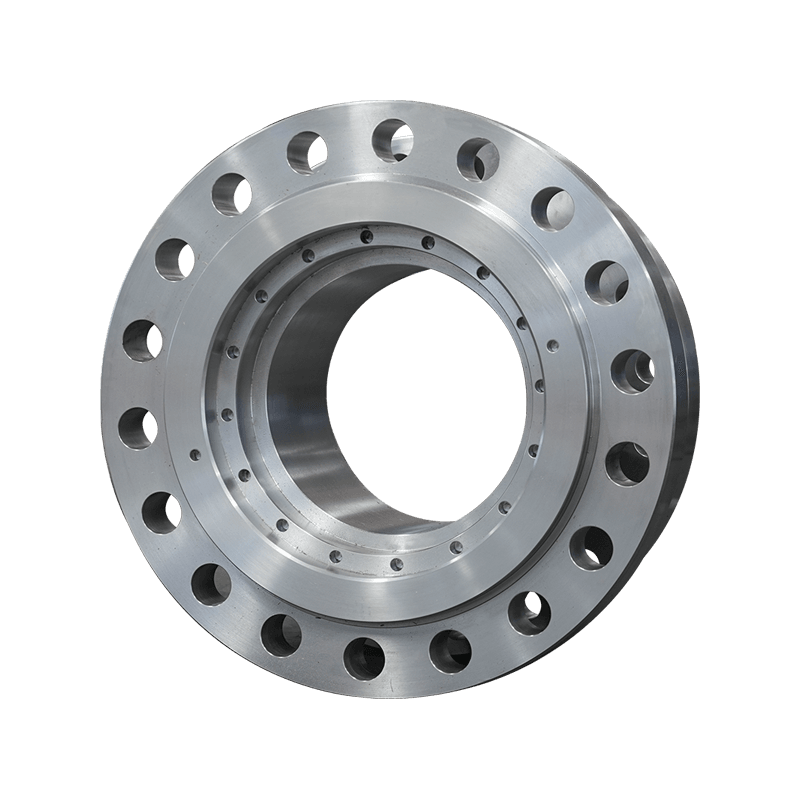
Machining the Marvels: The Manufacturing Process
The creation of these parts is a high-tech dance between computer control and specialized tooling.
The Role of CNC Machines
The backbone of modern valve part manufacturing is the Computer Numerical Control (CNC) machine. These automated, multi-axis machines can perform complex operations—like turning, milling, and grinding—with minimal human intervention, ensuring repeatability and consistency across thousands of parts.
- Turning: Used to create cylindrical parts like stems and the outer surface of a ball. The workpiece rotates against a stationary cutting tool.
- Milling: Used to create non-circular features, such as mounting flanges or grooves on the valve body. A rotating tool moves around a stationary workpiece.
- Grinding: Often the final step, grinding uses abrasive wheels to achieve the ultra-smooth surface finishes required for sealing surfaces and stems. This is where the last micron of precision is achieved.
The Power of Exotic Materials
The choice of material is non-negotiable and depends entirely on the valve’s application:
| Material | Typical Application | Key Machined Feature |
|---|---|---|
| Stainless Steel (300 series) | General-purpose, water, non-corrosive liquids | Stems, balls, seats (good strength and corrosion resistance) |
| Monel/Inconel Alloys | Highly corrosive fluids (e.g., strong acids, seawater) | Seats and trim components (extreme corrosion resistance) |
| Titanium | Aerospace, high-temperature, lightweight applications | High-strength bodies, balls, and critical components |
| Brass/Bronze | Plumbing, lower pressure/temp service | Smaller valve bodies and threaded components |
The Ubiquitous Applications
The perfect performance of machined valve parts underpins almost every sector of industrial society:
- Oil and Gas: Controlling the flow of crude oil, natural gas, and refined fuels at thousands of pounds per square inch (PSI). Failure is not an option due to safety and environmental risks.
- Power Generation: Managing high-temperature, high-pressure steam in nuclear and fossil fuel power plants.
- Chemical Processing: Handling volatile, corrosive, and toxic chemicals with zero leakage.
- Water Treatment: Controlling the flow of potable water and wastewater throughout municipal systems.
- Aerospace: Regulating hydraulic and fuel systems where weight and reliability are paramount.
The next time you see a pipeline, an industrial boiler, or even a water meter, remember the invisible work of the machined valve parts—tiny, precise components that maintain the flow of energy and resources that keep the world running smoothly and safely.
