


 русский
Core Casting Processes for High-Performance Valve Components
The production of valve components requires high structural integrity to withstand pressure, temperature fluctuations, and corrosive media. Investment casting, often referred to as lost-wax casting, is the preferred method for complex valve bodies and internals. This process allows for intricate geometries and thin-walled sections that are difficult to achieve through traditional sand casting. By using ceramic molds, manufacturers can achieve a superior surface finish, which significantly reduces the need for extensive secondary machining on the valve's sealing surfaces.
Sand casting remains a staple for larger valve components, such as gate valve bodies and large-diameter butterfly valve discs. While it offers lower precision compared to investment casting, modern resin sand techniques have improved dimensional accuracy. For high-volume production of smaller, non-ferrous valve parts like brass or aluminum seats, die casting is frequently utilized due to its rapid cycle times and excellent repeatability. Choosing the right casting method is a balance between the complexity of the valve design, the material properties required, and the total production volume.
Critical Material Selection for Industrial Valve Castings
Selecting the appropriate alloy is the most critical step in ensuring the longevity of a valve. Different industrial environments demand specific metallurgical properties to prevent premature failure. The following table summarizes common materials used in valve component casting and their primary applications:
| Material Type | Common Grade | Key Characteristic |
| Carbon Steel | WCB, WCC | High strength; cost-effective for non-corrosive use. |
| Stainless Steel | CF8, CF8M (316) | Excellent corrosion resistance; used in chemical processing. |
| Duplex Steel | 4A, 5A, 6A | Superior pitting resistance for marine and offshore. |
| Alloy Steel | WC6, WC9 | High-temperature stability for power plant steam lines. |
Technical Challenges and Defect Prevention in Valve Casting
Controlling Porosity and Shrinkage
Internal defects like gas porosity and shrinkage cavities are the primary causes of valve leakage under pressure. To mitigate these risks, engineers use sophisticated casting simulation software to design optimal gating and riser systems. Proper venting of the mold ensures that gases can escape as the molten metal enters the cavity. Additionally, controlling the cooling rate is essential to prevent internal stresses that could lead to hot tearing or cracking in thick-walled valve sections.
Precision Machining Allowances
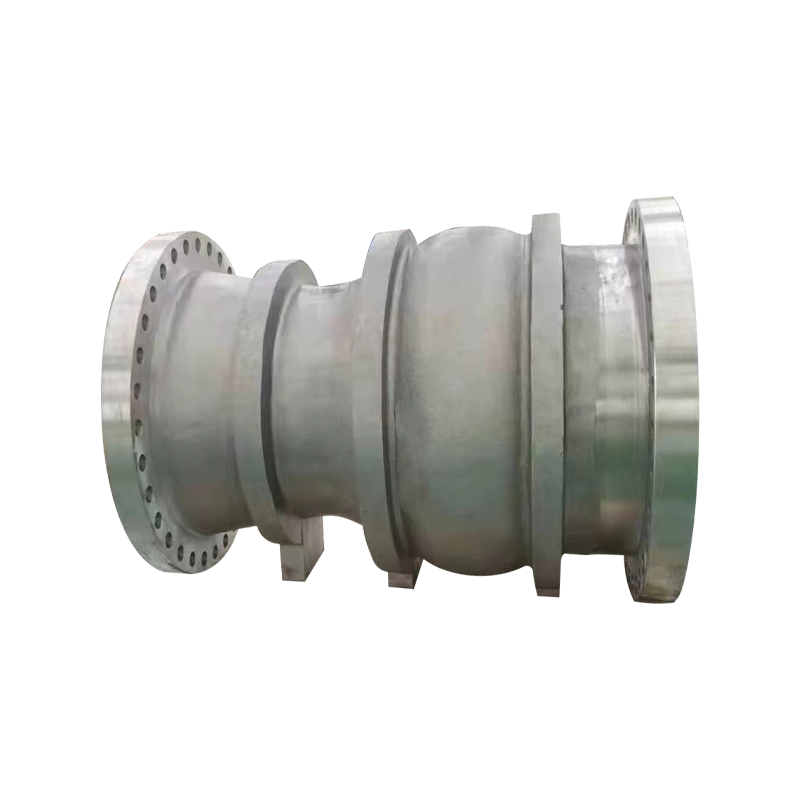
While casting produces the near-net shape, critical areas like the valve seat, stem hole, and flange faces require high-precision machining. Successful valve casting requires a strategic "machining allowance"—extra material left on the casting to be removed later. If the allowance is too small, the cast surface may not clean up; if it is too large, it increases tool wear and waste. Modern CNC integration allows for seamless transition from the cast component to the finished, high-tolerance part.
Quality Assurance and Non-Destructive Testing (NDT)
Because valves are pressure-containing equipment, quality control is governed by strict international standards such as ASME B16.34. Casting facilities must implement rigorous testing protocols to ensure the safety of the final product. The following NDT methods are standard in the industry:
- Radiographic Testing (RT): Uses X-rays to detect internal inclusions, cracks, or voids within the valve body.
- Magnetic Particle Inspection (MPI): Effective for identifying surface and near-surface discontinuities in ferromagnetic materials.
- Dye Penetrant Inspection (DPI): A cost-effective way to reveal surface cracks on non-magnetic stainless steel castings.
- Hydrostatic Testing: While technically a valve assembly test, it validates the casting's ability to hold pressure without weeping or rupturing.
- Ultrasonic Testing (UT): Uses high-frequency sound waves to measure wall thickness and detect deep-seated internal flaws.
Optimizing the Supply Chain for Valve Casting Components
Procuring high-quality casting valve components requires a deep partnership between the foundry and the valve manufacturer. It is essential to provide the foundry with detailed 3D models and clear specifications regarding chemical composition and mechanical properties. Many modern foundries now offer "one-stop" services, including heat treatment, rough machining, and surface coating (such as ENP or painting), which streamlines the production timeline and ensures better quality control across the entire manufacturing lifecycle.
