


 русский
Advanced Casting Techniques for Critical Valve Geometry
Casting remains the preferred manufacturing method for valve components due to its ability to create complex internal cavities and contoured flow paths that are nearly impossible to achieve through machining alone. For high-pressure applications, the integrity of the casting determines the valve's ability to resist deformation and fatigue. Modern foundries utilize investment casting for smaller, high-precision components like trim and seats, while sand casting is utilized for large-scale bodies and bonnets. The choice of casting technique directly influences the grain structure of the metal, which in turn dictates the component's mechanical properties under thermal stress.
Achieving a "near-net-shape" through casting reduces the need for extensive secondary machining, which preserves the material's structural integrity. By utilizing 3D-printed sand molds or ceramic shells, manufacturers can now achieve tighter tolerances in the valve's "critical zones," such as the stuffing box and the flange faces. This precision ensures that the final assembly maintains a tight seal, even when subjected to the corrosive environments typical of oil, gas, and chemical processing plants.
Material Selection and Metallurgical Properties
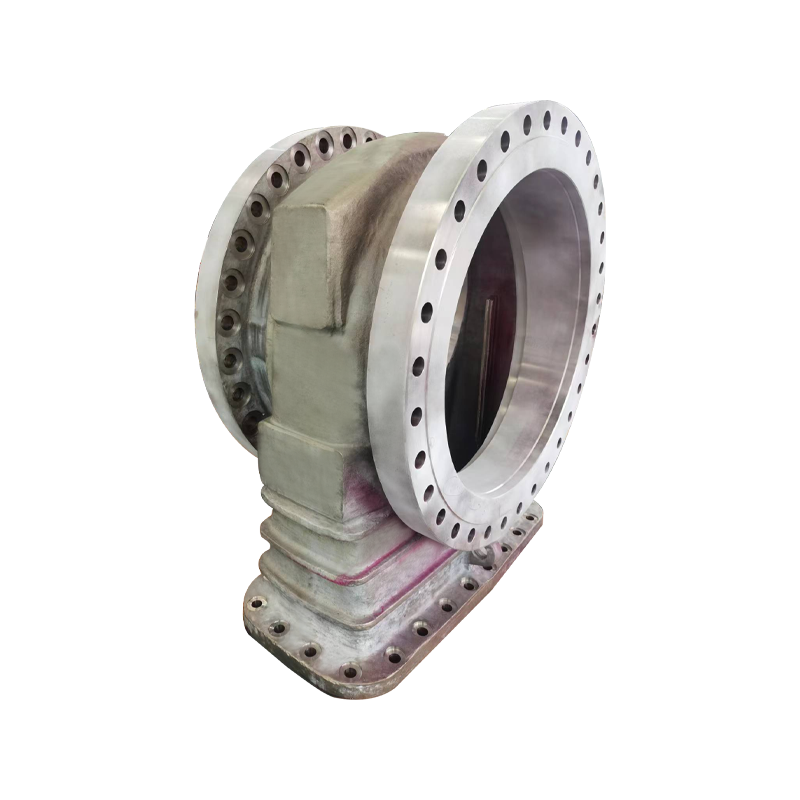
The performance of a Casting Valve Components is heavily dependent on the alloy selected. Different environments require specific metallurgical profiles to prevent premature failure. Below is a comparison of common materials used in valve casting:
| Material Grade | Common Applications | Key Benefit |
| WCB Carbon Steel | General Industrial Use | Cost-effective & Ductile |
| CF8M Stainless Steel | Chemical & Corrosive Media | High Corrosion Resistance |
| Hastelloy/Inconel | Extreme Temperature/Pressure | Oxidation Resistance |
| Duplex Steel | Desalination & Marine | High Yield Strength |
Quality Control and NDT Protocols for Castings
Non-Destructive Testing (NDT) Methods
Because casting is a solidification process, internal defects such as shrinkage, porosity, or inclusions can occur. Rigorous NDT protocols are essential to ensure that the valve body can withstand rated pressures without leaking. These tests are often mandated by international standards such as ASME B16.34.
- Radiographic Testing (RT): Uses X-rays to detect internal voids or cracks within the cast wall.
- Magnetic Particle Inspection (MPI): Identifies surface and near-surface discontinuities in ferromagnetic materials.
- Ultrasonic Testing (UT): High-frequency sound waves measure wall thickness and detect deep-seated flaws.
- Dye Penetrant Inspection (DPI): A low-cost method to reveal surface cracks or porosity invisible to the naked eye.
Optimizing the Gating and Riser Design
The success of a cast valve component begins with the mold design. The gating system—the network of channels that delivers molten metal to the mold cavity—must be designed to minimize turbulence. Turbulent flow can introduce air and impurities, leading to "gas holes" in the finished valve body. Engineers use solidification simulation software to predict how the metal will cool, ensuring that the heavy sections of the valve, like the flanges, are fed with enough molten material to prevent shrinkage.
Risers act as reservoirs of molten metal that "feed" the casting as it shrinks during cooling. In valve manufacturing, placing risers strategically over the thickest sections is critical. If the riser design is flawed, the valve may pass a visual inspection but fail a hydrostatic pressure test due to microscopic internal pathways. Proper thermal management during the cooling phase ensures a uniform grain structure, which is vital for the long-term weldability and repairability of the valve in the field.
Heat Treatment Post-Casting
Stress Relieving and Solution Annealing
Once the component is removed from the mold, it often undergoes heat treatment to refine its properties. For stainless steel castings, solution annealing is used to dissolve carbides back into the metal matrix, which maximizes corrosion resistance. For carbon steel, normalizing or tempering is used to achieve the desired balance between hardness and toughness. This step is non-negotiable for valves intended for sub-zero temperatures (cryogenic service) or high-cycle steam applications where thermal shock is a constant threat.
