


 русский
The World of Industrial Flow Control
Every day, vast amounts of liquids, gases, and slurries are transported, processed, and regulated across the globe. From the oil pipelines spanning continents to the complex plumbing systems in your local manufacturing plant, precise control over these fluids is absolutely critical. This is where the unsung heroes of industry—valves—come into play. Among the many types, the forged ball valves stand out as a robust and reliable workhorse.
What is a Valve and Why is it Essential?
At its core, a valve is a mechanical device that controls, directs, or regulates the flow of a fluid by opening, closing, or partially obstructing various passageways. Without valves, modern industrial processes would be impossible. Imagine a complex chemical reaction where the precise mixing of two components is required; a faulty valve could lead to a ruined batch, or worse, a dangerous incident.
Delving into the Ball Valve Design
The ball valve is a specific type of quarter-turn valve that uses a rotatable ball with a bore (or hole) through the center. When the valve is open, the bore aligns with the flow, allowing the fluid to pass through. When the valve is closed, the ball is rotated 90 degrees, and the solid side of the ball blocks the flow.
Key Advantages of Ball Valves
- Quick Operation: The quarter-turn nature means they can go from fully open to fully closed in a matter of seconds.
- Excellent Sealing: When fully closed, they offer a very tight seal, which is crucial for preventing leaks.
- Low Pressure Drop: In the fully open position, the fluid passes straight through the bore with very little resistance, maximizing flow efficiency.
- Compact Design: Their simple mechanism allows for a smaller physical footprint compared to some other valve types.
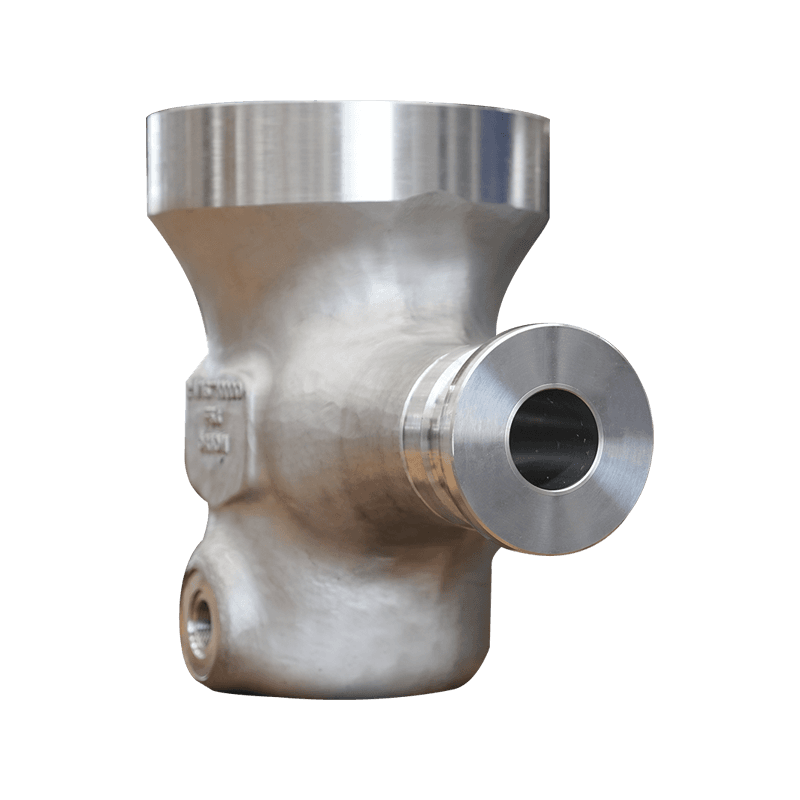
The Power of Forging: Why Forged Ball Valves are Superior
While ball valves can be manufactured in a few ways, the term “forged” refers to the specific process used to shape the valve body. Forging is a manufacturing process that involves shaping metal using localized compressive forces, typically applied with a hammer or press. This process fundamentally alters the metal’s structure, creating a product far superior to those made by casting.
The Forging Process Explained
- Heating the Billet: A solid piece of metal (a billet) is heated to a high temperature, below its melting point, making it malleable.
- Compressive Shaping: The hot billet is placed in a die and hammered or pressed into the desired shape of the valve body.
- Grain Structure Refinement: This intense mechanical working refines the internal grain structure of the metal. Unlike the random, porous structure of a cast part, the forged part develops a continuous grain flow that follows the contours of the valve shape.
The Material Superiority of Forged Ball Valves
The resulting change in material structure directly translates to superior performance.
- Higher Strength and Toughness: The refined, directional grain structure makes the forged material significantly stronger and more resistant to impact and fatigue than cast metals. This is vital in high-pressure and high-temperature applications.
- Reduced Porosity: Casting can sometimes leave small, internal voids or air pockets (porosity) within the metal, which can become weak points. Forging eliminates this risk, creating a dense, non-porous body that is less likely to leak under pressure.
- Better Weldability: The superior material integrity of forged ball valves means they are often easier to weld into piping systems, ensuring a strong, leak-proof connection.
Where Forged Ball Valves Make a Difference
Due to their exceptional strength and integrity, forged ball valves are the preferred choice in some of the most demanding industrial environments.
- Oil and Gas Industry: They are crucial in pipelines, refineries, and offshore platforms where pressures and temperatures are extreme, and safety is paramount.
- Chemical and Petrochemical Plants: Handling corrosive and dangerous media requires a valve body that will not fail, making the non-porous, high-strength forged option ideal.
- Power Generation: In steam and feedwater systems, they handle very hot, high-velocity fluids with the necessary reliability.
In summary, the forged ball valve is far more than just a metal switch. It is a carefully engineered component whose forging process gives it the strength and resilience needed to maintain the flow, safety, and efficiency of the world’s most critical industrial operations.
